Our own selection, tested on foot, in the medina of Salé.
From the café terraces of Rabat, from the tram crossing the Bouregreg, from the plane landing at Rabat-Salé airport, the thousand-year-old medina is right there, facing you. Few travellers take the time to cross the river.
After several decades living in Rabat, we settled in the medina of Salé, on Rue Moul Goumri, close to the Great Mosque, to take over an old house. What we found there won us over : Salé keeps its neighbourhood life, at its own pace, with its souks, its craftspeople and its families.
Here are nine things to do in the medina of Salé, tested on foot and in every season.
01
Walk the ramparts and collect the gates
Start at Bab el-Mrissa, to the south. This 13th-century Marinid sea gate, built on a monumental scale, once let ships sail straight into an inner basin, a reminder of the days when the Republic of Bouregreg, a corsair city, made European navies tremble.
Head north to Bab Chaafa, an Andalusian-inspired gate overlooked by the tourist circuits. A café has set up inside its tower: from there, you watch the ordinary life of the medina go by. Finish at Bab Fès (Bab Lakhmiss), to the southeast, an Almoravid-era gate, among the oldest in the city.
Our tip : pass through the gate, then turn around to look at the medina from the outside.
02
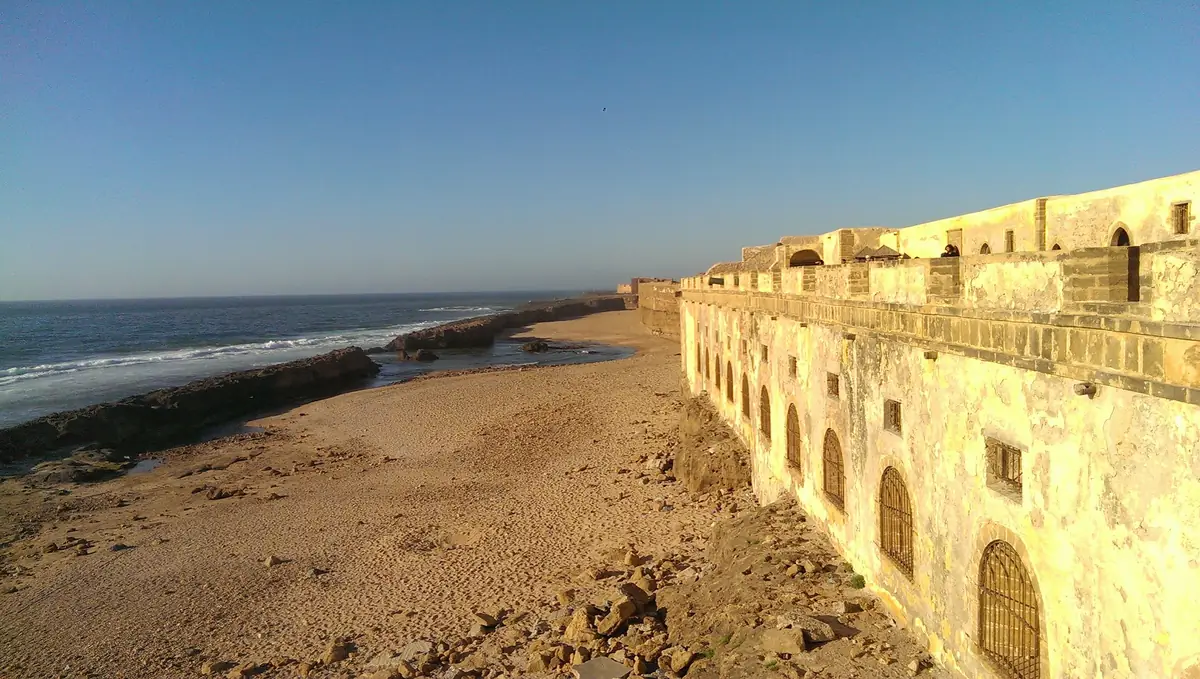
Climb up to Borj Adoumoue, the "Bastion of Tears"
This artillery bastion sitting on the ramparts facing the Atlantic has no ticket office and no set hours : the caretaker opens it on request, for about ten dirhams. Inside, period cannons ; at the top, a sweeping view over the ocean, the mouth of the Bouregreg and Rabat opposite.
Its strange name intrigues every visitor, and it has a story. In 1260, on a day of Eid celebration, a Castilian fleet sent by Alfonso X landed by surprise at the river mouth, right where the ramparts stopped : the city was sacked, thousands of Slaoui residents taken captive to Seville. The following year, the Marinid sultan Abu Yusuf Yaqub had a bastion built on the exact site of the landing and named it Borj Adoumoue, the Bastion of Tears, in memory of the city's grief. Eight centuries later, Salé has never renamed its bastion, and the house's Borj Suite is named after it.
Insider's tip : come in late afternoon, when the light rakes the ramparts and the fishermen head home. You will very likely be the only visitors.
03
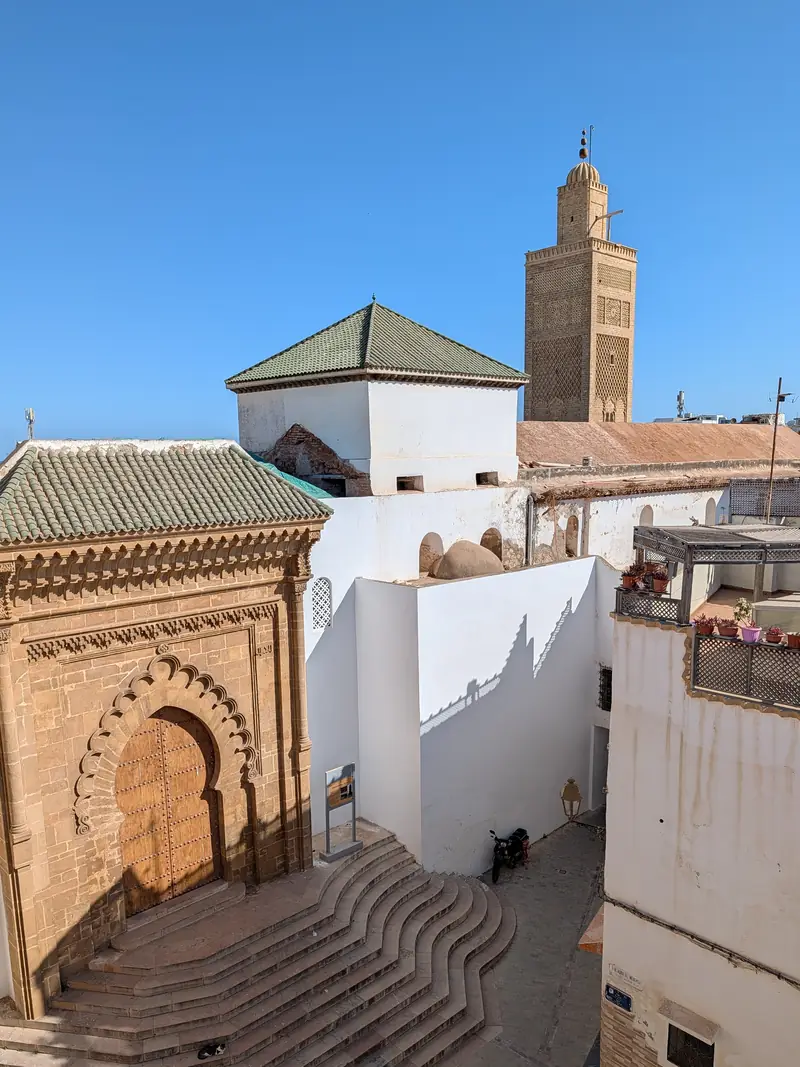
Stop by the Great Mosque and the mausoleum of Sidi Abdellah Ben Hassoun
At the top of the medina, the Great Mosque of Salé, founded in the 11th century, forms with its surroundings the sacred heart of the city. A few steps away stands the mausoleum of Sidi Abdellah Ben Hassoun, the patron saint of Salé, protector of travellers and seafarers.
Access to places of worship is reserved for Muslims, but the exterior is enough to feel the atmosphere : this is where, every year on the eve of Mawlid, the procession of the candles takes place, a parade of monumental lanterns carried through the medina to music, a tradition specific to Salé, kept alive for centuries. If your dates line up, plan your stay around it.
04
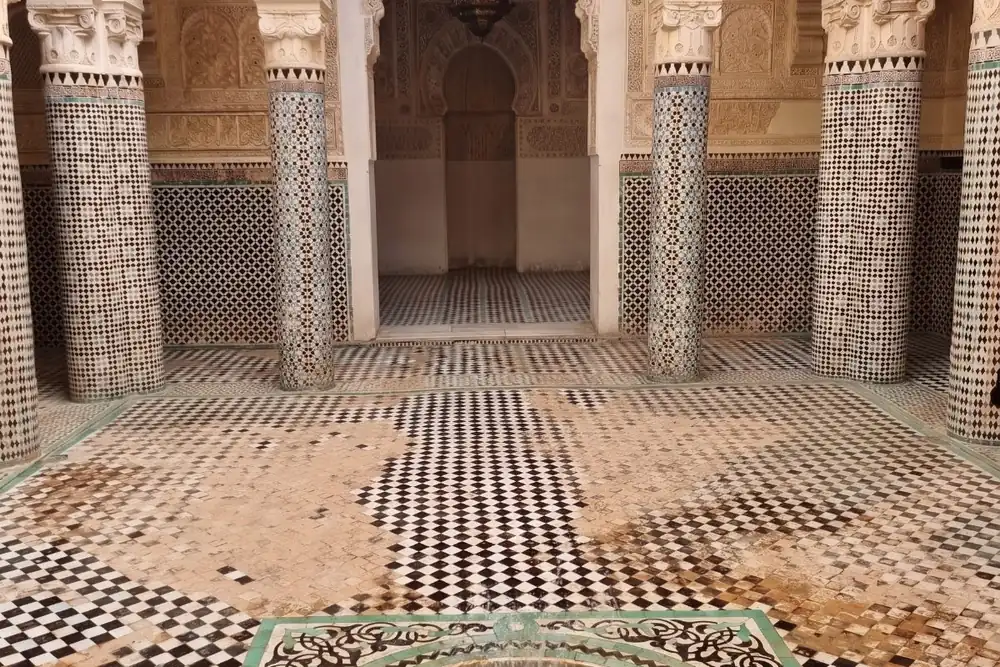
Step into the Marinid Medersa, built in the 14th century
This is the only monument in the medina fully open to visitors. Founded in 1341 by the Marinid sultan Abu al-Hasan, this former Quranic school packs into a few dozen square metres all the refinement of Moroccan craft : zellige, carved stucco, sculpted cedar. Climb up to the terrace : the view takes in the rooftops of the medina, the Bouregreg and the Hassan Tower opposite.
The entrance costs around 80 dirhams. You will often have it to yourself.
Our tip : if the terrace is open, go up.
05
Wander the Talaa quarter and the zaouias
Around the Great Mosque lies the scholarly, spiritual side of Salé : the Talaa quarter and its residential lanes, where studded doors hide sumptuous homes that show nothing to the street. That is the very principle of the Arab house : all the richness is inside.
This is where the zaouias, seats of the Sufi brotherhoods, are concentrated. The Tijaniyya zaouia, whose influence spans all of West Africa, draws pilgrims from Dakar or Abidjan. Closed to non-Muslims, they can be sensed through ornate doorways and the steady coming and going of the faithful. Walk slowly, look up : every door-knocker, every lintel tells of a family, an era, an Andalusian origin.
06
Take your time on the Souk Laghzel square
Souk Laghzel, the old wool market, is a place to stop and linger. The square is shaded by trees, lined with café terraces where locals take their time over a glass of tea watching the neighbourhood go by. A few concept stores have opened here in recent years, alongside longer-established shops.
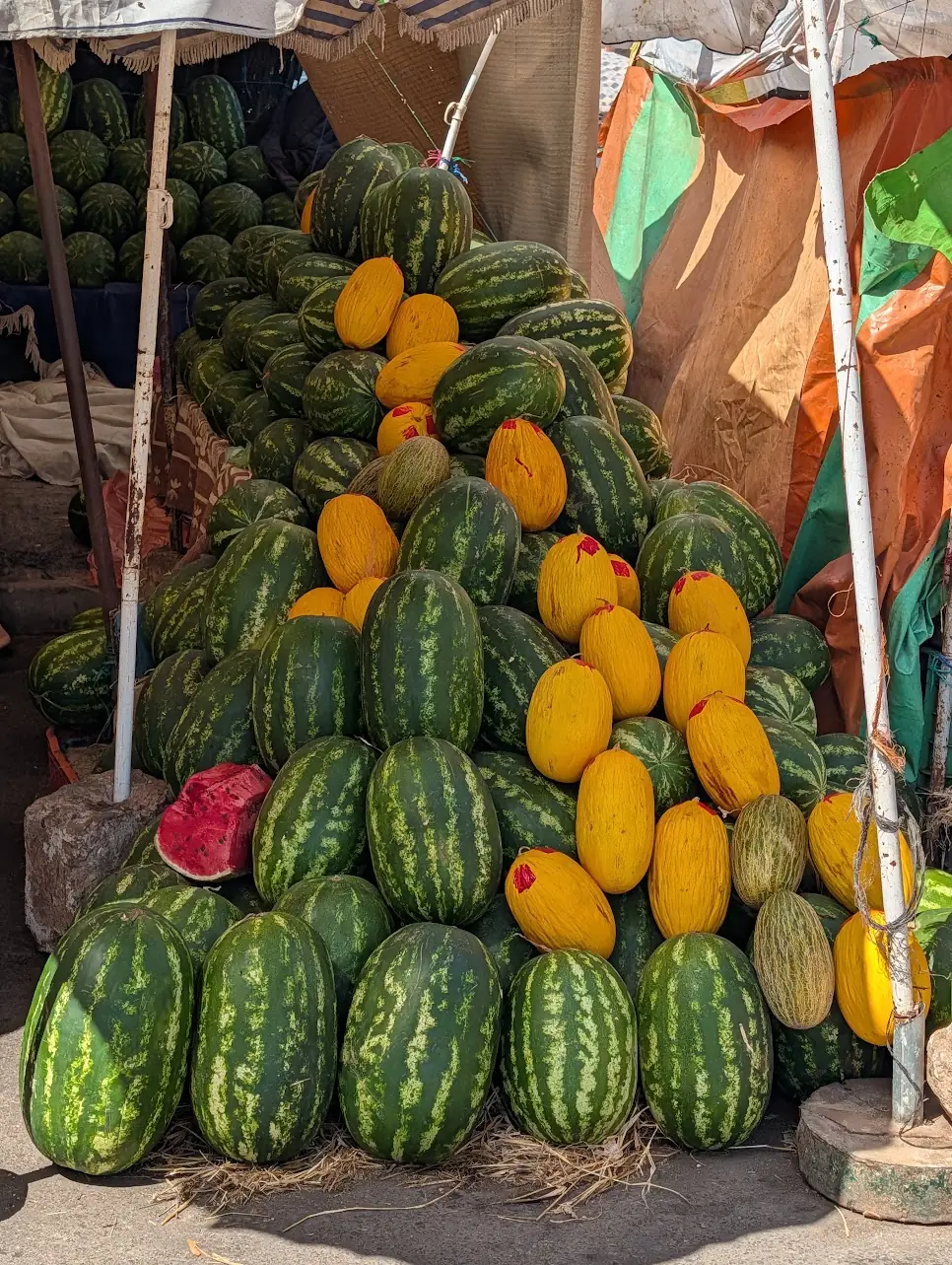
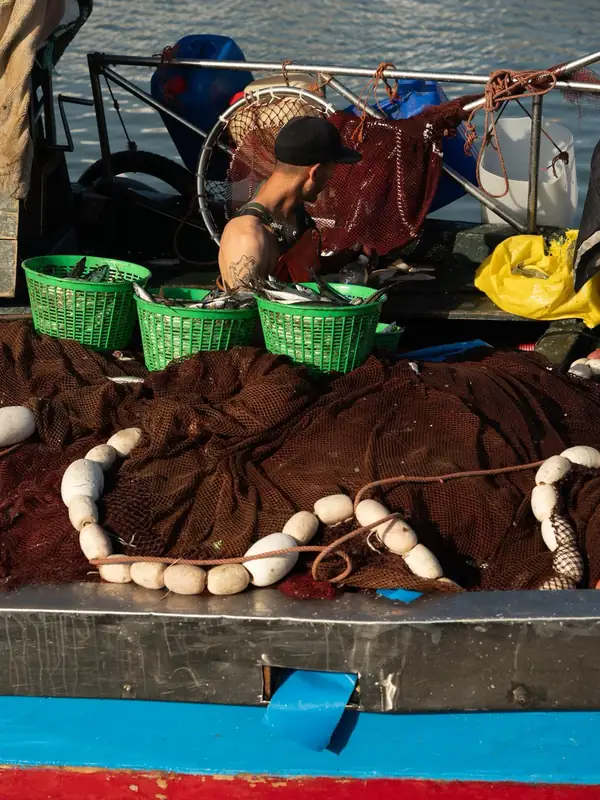
All around, the souks sell to the people of the medina : spices, wool, mats, clothing, medicinal herbs. Push on to Bab Sebta, to the northeast, for the food market, with its fruit, fish from the nearby auction and mountains of mint.
Watermelon stall, Bab Sebta market
07
Meet the potters of El Oulja
A short taxi ride from the medina, on the bank of the Bouregreg, the El Oulja potters' complex brings together dozens of workshops where clay is still worked as it was a century ago : foot-powered wheels, kilns, sun-drying. Salé's pottery remains little known: you watch the craftspeople at work, and you buy at workshop prices.
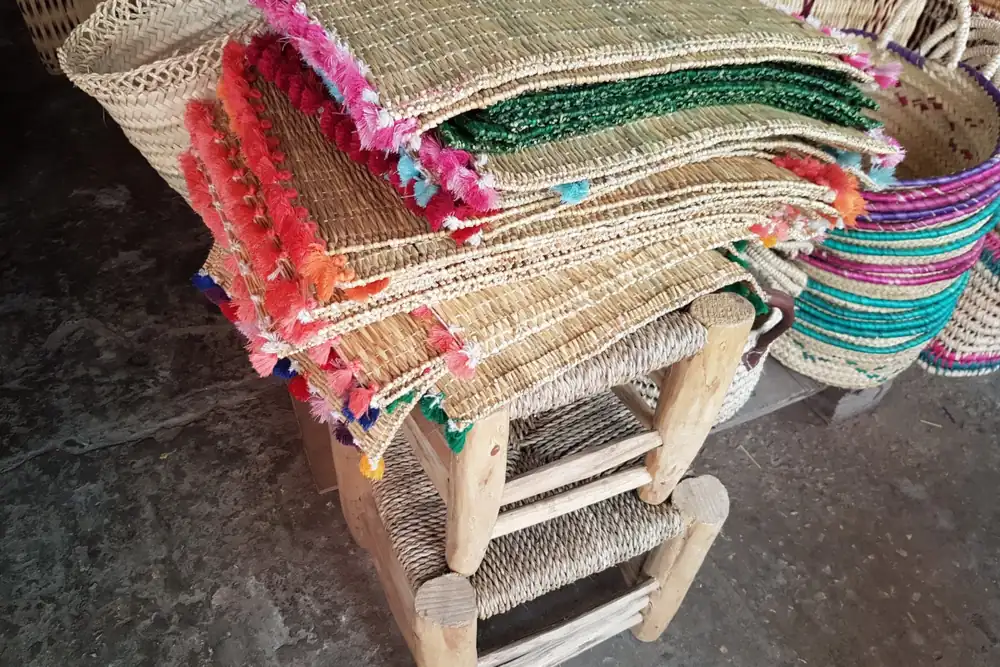
Basket-weavers and wrought-iron workers are here too. This is the place to buy a souvenir that is actually one.
Mats and baskets at a basket-weaver's in El Oulja
08
Discover the Belghazi museum of musical instruments
Within the medina itself, housed in a former medersa on the Mellah side, the old Jewish quarter of Salé, the Belghazi museum of musical instruments gathers the collection patiently built by the family of the same name : instruments of the Andalusian and Berber traditions, lutes, rebabs, percussion. A little-known place that recalls Salé has always been a city of music, that of the Andalusian noubas as much as that of the brotherhoods.
Not to be confused with the Dar Belghazi in Bouknadel, on the road to Kénitra, run by the same family of collectors : this one is a short walk from the souk.
09
End with your feet in the sand
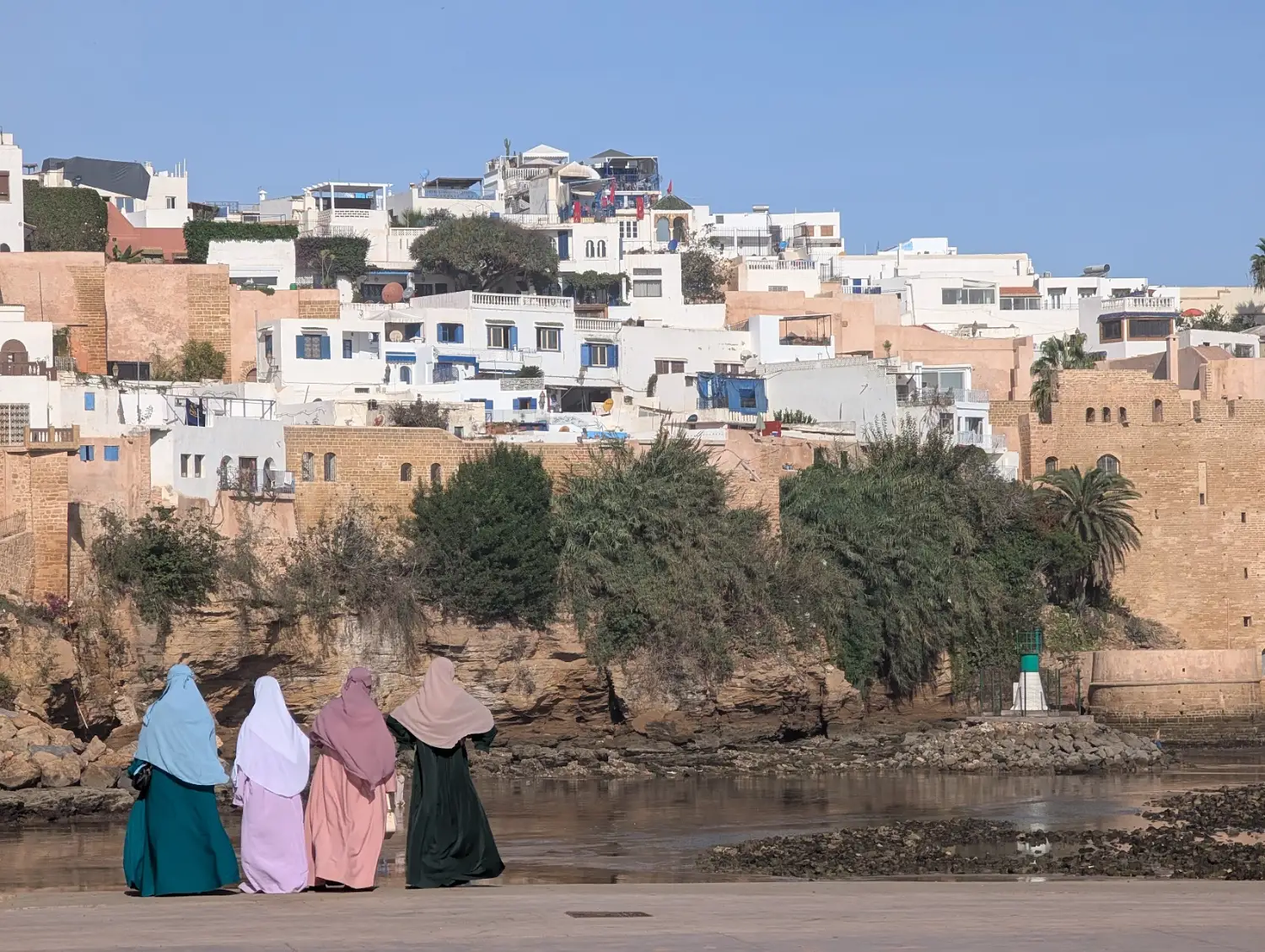
Salé is a seaside city, and its beach is a short walk from the medina. It belongs to Slaoui families, Bouregreg surfers and fishermen. In the late afternoon, walk towards the mouth of the river : on one side the illuminated Hassan Tower and Kasbah of the Oudayas, on the other the ramparts of Salé.