Skip to content
Dar El Mouhitدار المحيط
Book
FR EN ع
Book
FR EN ع

Bouregreg · One destination

Rabat-Salé

الرباط-سلا

Two banks, one destination.

View of the Kasbah of the Oudayas in Rabat, from the Salé corniche, walkers in the foreground
The river in between

Rabat and Salé look at each other from the two banks of the same river. You visit one, you live on the other, and crossing between them is part of the stay.

The Bouregreg holds one region together. The capital carries the monuments people come to see; Salé, on its own bank, keeps a thousand-year-old medina that lives for its own people. Dar El Mouhit is on that side of the river.

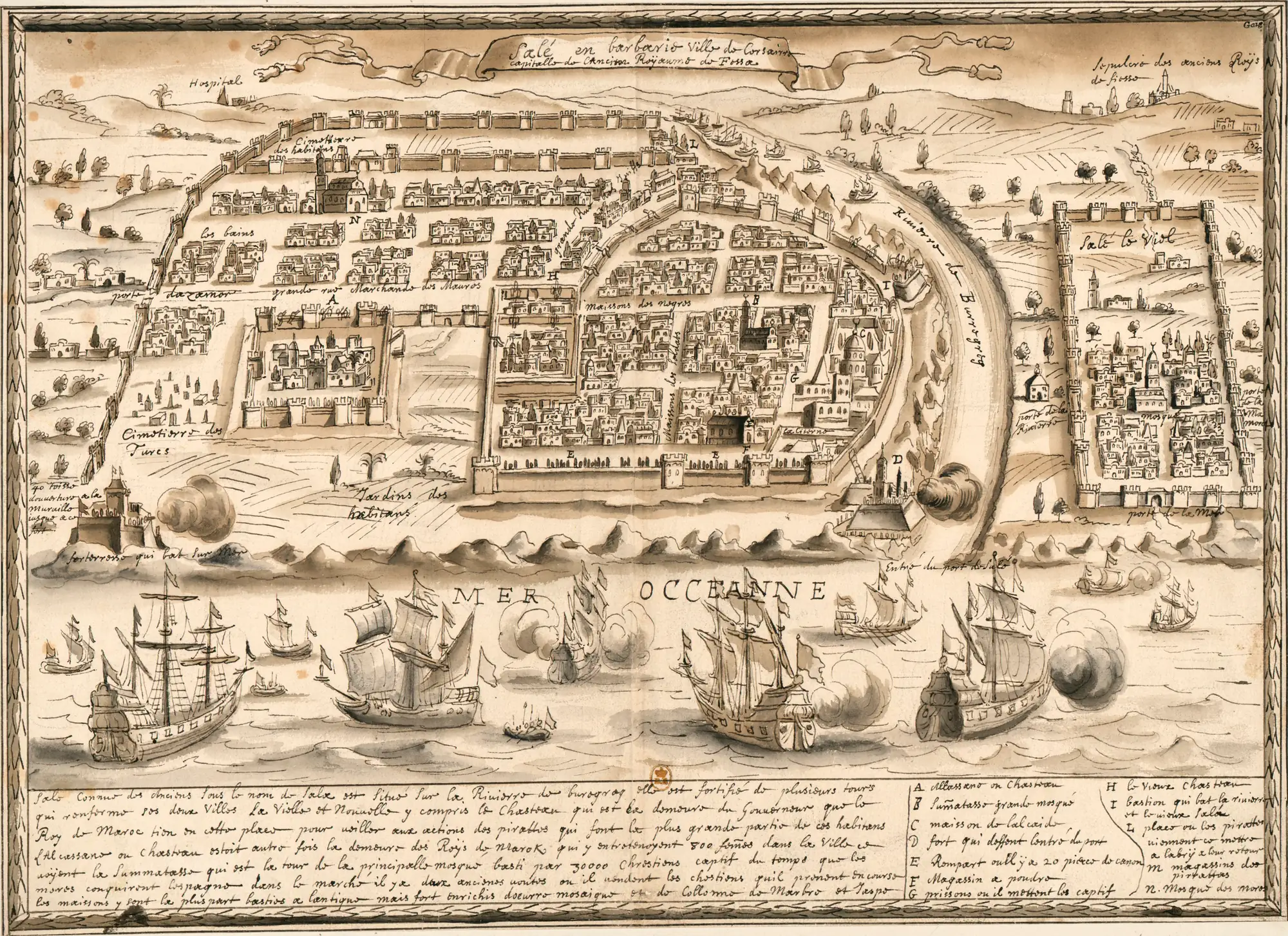
Old pen-and-wash drawing: two walled towns on either side of a river, sailing ships in the foreground
Salé in Barbary, city of corsairs · 17th century Drawing attributed to Gerolamo Albrizzi. Right of the Bouregreg, Salé, then called “Old Salé”; on the left, the Rabat bank and its kasbah, then “New Salé”. Source gallica.bnf.fr / BnF
From one bank to the other

What you see,
what you live

On the Rabat bank

The capital is a city you visit: its great monuments stand close to one another, between the river mouth and the gardens.

  • The Hassan TowerThe unfinished 12th-century minaret and its field of columns, above the river.
  • The Oudayas kasbahA town within the town, lanes washed in blue and white, facing the Atlantic.
  • The Chellah necropolisMerinid walls set over an ancient city, at the edge of the water.

On the Salé bank

Salé is a city you walk through: the medina is a lived-in quarter, crossed from one gate to the next among working craftsmen.

  • Bab MrissaThe water gate through which ships once sailed into the city.
  • The Merinid medersaA 14th-century Koranic school of carved cedar and zellige, its rooftop open over the medina.
  • The souks and workshopsMats, copper, pottery, basketry: in Salé, craft is a working trade.
The crossing

Crossing from one
bank to the other

01

The Hassan II bridge

It spans the Bouregreg where the estuary opens towards the Atlantic, carrying both road traffic and the tramway. This is the most direct way between the two medinas.

02

The tramway

It links the two cities across the river. On the Salé side you step off at Bab Mrissa, at the entrance to the medina: the rest is done on foot.

03

The ferrymen's boats

Rowing boats still carry passengers between the two banks, at water level. It is the oldest of the crossings, and still the truest.

Crossing the Bouregreg is the moment you understand that the two cities are one.

The question we are asked

How the medina of Salé differs
from central Rabat

The difference is real, and each bank does its own thing: that is exactly why it makes sense to sleep on one and visit the other.

Scale

Rabat is a capital: ministries, wide avenues, recent districts. Salé has those too, and its medina fits inside the ramparts, walked from one gate to the next.

Rhythm

In Rabat, monuments are stops on a route. In Salé, the medina is a neighbourhood, with its morning markets, its workshops, its schools and its hours.

What you keep

Rabat is visited. Salé lets itself be watched living, and that is what you take home from a stay on this side of the river.

Where to stay

Staying on the
Salé bank

Choosing Salé means sleeping in the lived-in city and crossing the river to visit the other one. Both banks stay within reach, in both directions.

Dar El Mouhit occupies an old house in the heart of the medina, Sala el Bali. Five rooms, a patio, a rooftop open to the Atlantic: the Bastion of Tears, 550 m away on foot, looks out to the open sea. The house already welcomes its first guests, in its original state, and we keep making it more beautiful with care.